"Word bird" does not have one fixed, dictionary-approved meaning. What it means depends almost entirely on where you saw it: a social media bio, a meme, a caption, a children's book title, a game, or a longer phrase like "bird is the word" or "word from the bird." If you searched for this and landed here, the most useful thing I can do is help you figure out which version you're dealing with, because the phrase behaves very differently depending on context.
Word Bird Meaning: What Does the Term Refer To?

Marcus Winters
23 Mar 2026
"Word Bird" Is Not a Literal Bird
Let's get this out of the way first. "Word bird" is not a species, not an ornithology term, and not a reference to an actual bird that speaks words (though parrots might argue otherwise). When people search for this phrase, they're almost always trying to decode something they encountered in language, online culture, or a branded context, not identify an animal.
In practical usage, "word bird" shows up in a few distinct categories: as a personal brand or username (think someone calling themselves "Word Bird" to signal they're a writer or language lover), as part of a longer culturally recognized phrase, as a children's publishing concept, or as a puzzle or game title. Each of those carries its own meaning, and none of them overlap in any meaningful way. This is exactly why you can't just Google it and get a clean answer.
Slang, Memes, and Usernames vs. Figurative Language
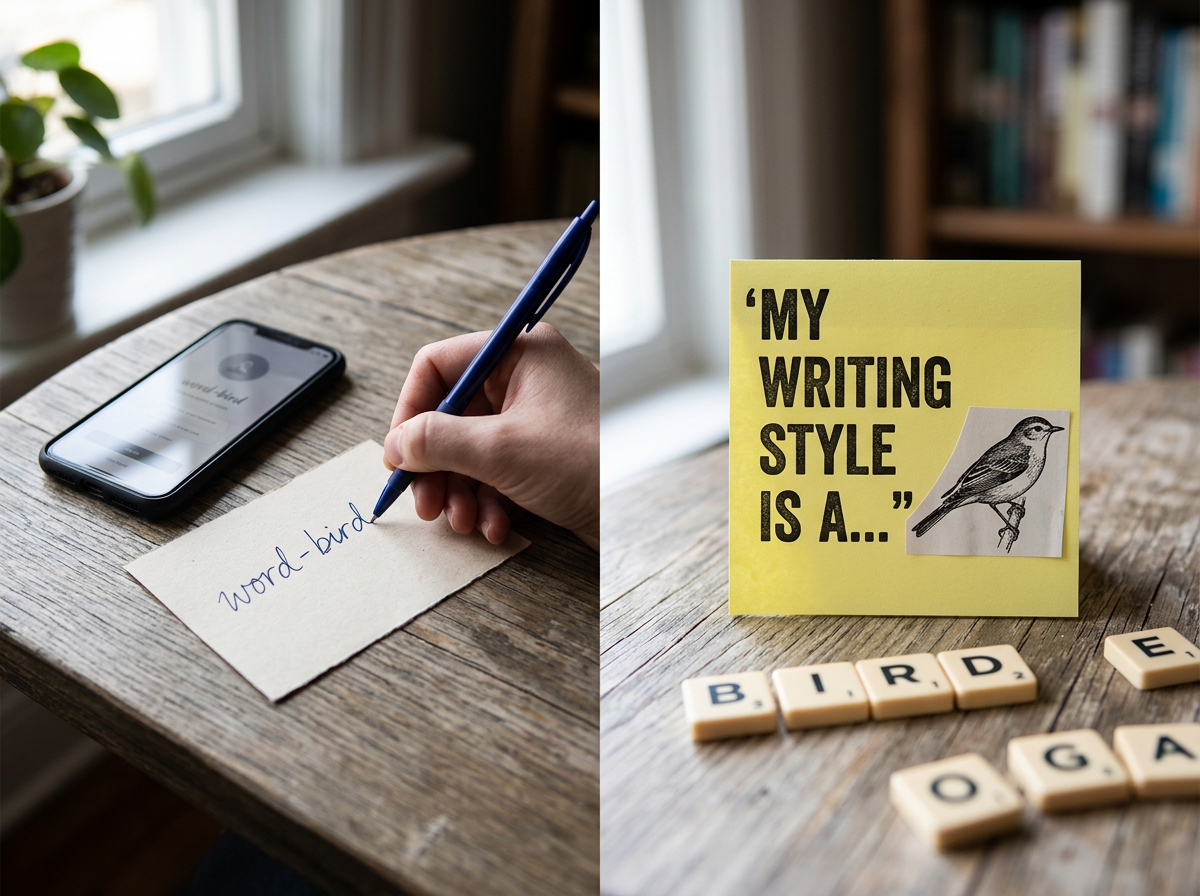
There are two broad lanes "word bird" tends to fall into, and knowing which lane you're in changes everything.
The username and personal brand lane
In social media and personal branding, "Word Bird" (often hyphenated as "Word-Bird") is used by writers, editors, content creators, and language enthusiasts as a self-descriptor. If you saw it in someone's bio, it's almost certainly this: a playful compound that signals "I work with words" combined with the lightness and freedom that birds carry as a symbol. One well-documented example is a professional who runs Word-Bird.net and describes herself as a creative communicator. This is not slang for anything secretive, it's just a clever identity label.
The phrase and meme lane
If you saw "word bird" embedded in a phrase rather than as a standalone label, you're probably dealing with a culturally recognized expression. Two of the most common ones are "bird is the word" (popularized repeatedly in pop culture, most notably through a Family Guy sketch referencing the 1963 song "Surfin' Bird") and "word from the bird," which is used to vouch for the truth of something surprising, essentially meaning "trust me on this." In both cases, "bird" is not modifying "word" as a compound noun. The two words are playing separate roles inside a phrase with its own established meaning.
The British slang angle
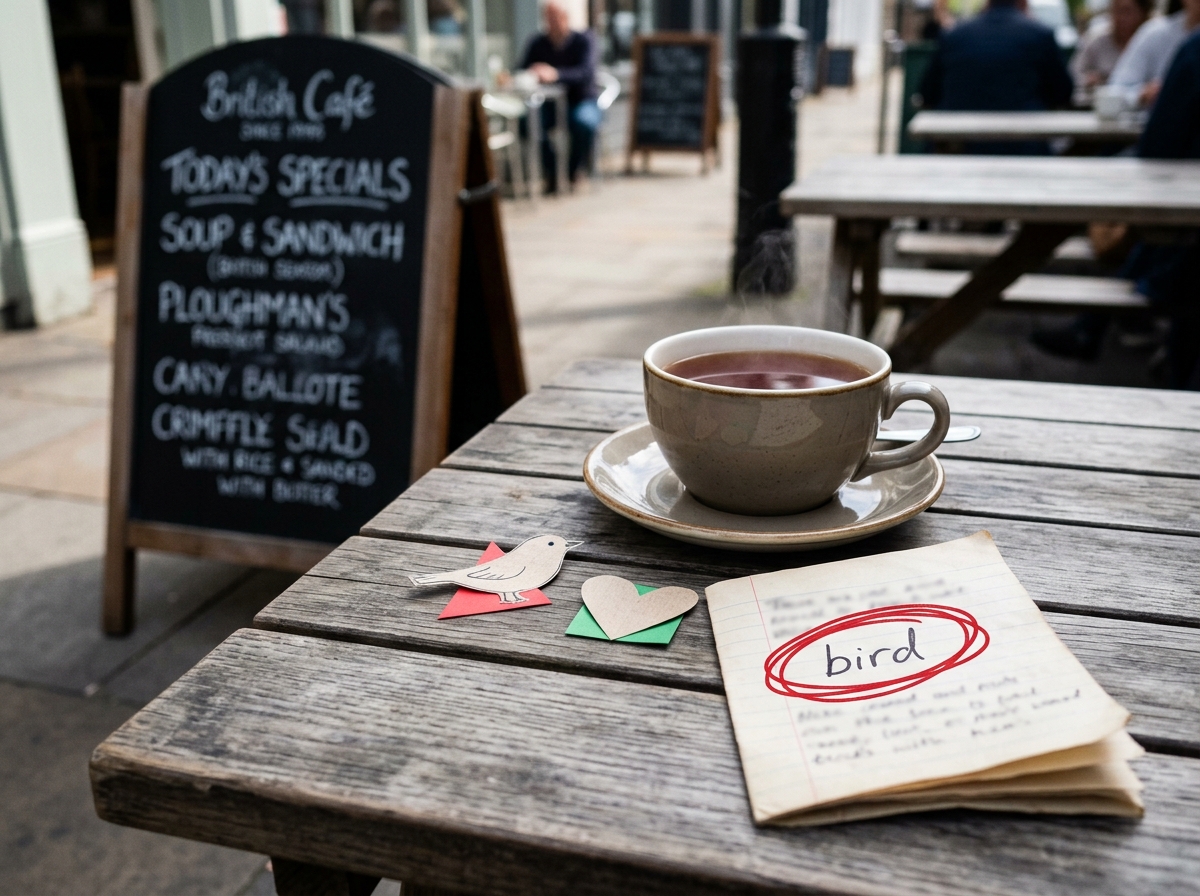
There's a third lane that's easy to miss if you're not from the UK. In British English, "bird" is informal slang for a young woman or girlfriend. So if someone wrote "word bird" in a British or UK-adjacent context, they might mean something closer to "a woman who talks" or even "my girl" in a casual, slightly dated way. Whether this reads as affectionate or dismissive depends heavily on tone and who's saying it. It's not universally offensive, but it's also not a neutral compliment. Regional context matters a lot here.
How to Match the Meaning to Your Specific Context
The fastest way to figure out what "word bird" means in the instance you saw it is to ask yourself three questions about where it appeared.
- Where exactly did you see it? A social media bio points toward personal branding. A caption or comment points toward slang or a phrase. A product name or book title points toward branded usage. A sentence that includes it as part of a longer expression points toward idiom or catchphrase territory.
- What was the surrounding text doing? If the phrase was part of something funny or nostalgic, check for "bird is the word" connections. If someone was vouching for information, look at "word from the bird." If it was a self-introduction, it's almost certainly a username or brand persona.
- What's the regional and social register? UK slang, US internet culture, children's media, and professional branding all use "word bird" in completely different ways. A tweet from a British user carries different odds than an Instagram bio from a freelance copywriter.
If you still have the screenshot or original post, look at everything around those two words before you try to interpret the phrase in isolation. The surrounding context will almost always resolve the ambiguity faster than any search.
Why Birds Make Such Good Metaphors for Words
If you're wondering why "bird" keeps showing up as a metaphor in language contexts, there's a real cultural logic behind it. Birds have been symbolic messengers across almost every major tradition: Hermes had his winged sandals, ravens carried news in Norse mythology, doves delivered peace, and songbirds have long stood in for the human voice and its power to communicate. When someone calls themselves a "word bird," they're tapping into that deeply rooted cultural image of the bird as a carrier of meaning.
The phrase "word from the bird" leans into exactly this tradition. The "bird" in that expression functions as a trusted messenger, a source you can believe. It's the same symbolic logic that makes phrases like "a little bird told me" feel so intuitive. Birds speak, birds travel, birds bring news. That's why the compound "word bird" feels natural even when it's invented fresh as a username or a personal brand, it borrows symbolic weight that listeners already feel.
This is distinct from the way birds show up in other idioms on this site, This is distinct from the way birds show up in other idioms on this site, like the swift bird as a symbol of agility or the secretary bird meaning as a symbol of calculated precision. In the case of "word bird," the bird element is almost always pointing toward communication, voice, and the movement of language rather than character traits or omens.. In the case of "word bird," the bird element is almost always pointing toward communication, voice, and the movement of language rather than character traits or omens.
The Spacing Problem: What "W O R D Bird" Actually Tells You
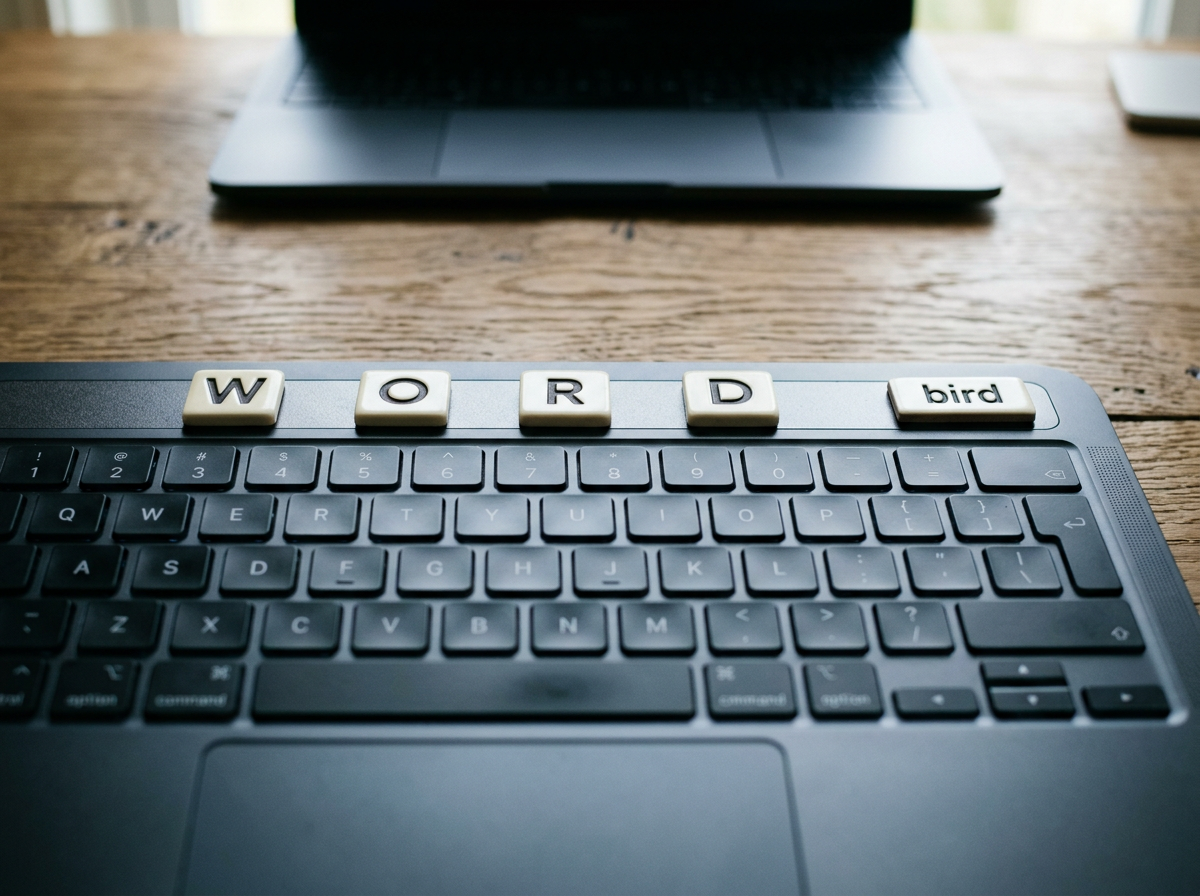
If you typed "w o r d bird" with spaces between each letter, you were probably trying to recreate the exact way the term appeared somewhere, or you were experimenting with search to get different results. Here's what's actually happening with that spacing and why it matters for your search.
When letters are spaced out like that, it's usually a typographic or stylistic effect, someone stretching text for aesthetic reasons in a graphic, a post, or a header. It doesn't change the underlying meaning of the phrase. However, it does change what Google returns. A spaced query like "w o r d bird" gets treated as a string of separate tokens, which means the search engine may surface pages that contain those individual letters scattered across content rather than the phrase itself. You'll get fragmented, often irrelevant results: profile metadata, design pages, or sites that happen to contain those characters in unusual layouts.
The hyphenation also matters. "Word-bird" (hyphenated) tends to surface branded personal sites and professional identities. "Word bird" (two words, no hyphen) pulls up puzzle games, children's books, and a mix of branded content. "Wordbird" (closed, no space) behaves like a named entity and returns apps, marketing tools, and storytelling consultancies. None of these search variants will reliably surface a slang definition, because there isn't one universal slang definition to find.
| Spelling Variant | What Search Typically Returns | Most Likely Meaning |
|---|---|---|
| word bird | Puzzle games, children's books, mixed branded content | Game/product title or casual compound |
| word-bird | Personal brand sites, professional bios | Creative identity or self-descriptor |
| wordbird | Apps, marketing tools, consultancies | Named entity/product brand |
| w o r d bird | Fragmented results, design/metadata pages | Typographic styling, not a distinct meaning |
Smarter Ways to Search for the Actual Meaning
Instead of searching the phrase alone, try searching it with the platform or context attached. "spark bird meaning" Twitter, "word bird username," or "word bird slang UK" will filter results toward what you actually need.
If you saw it in a specific community, subreddit, Discord server, or fandom, search within that community directly. Slang and inside jokes that feel universal often turn out to be hyper-local to one group, and a site-specific search will confirm that faster than a general Google query.
Practical Next Steps to Confirm the Meaning Right Now
Here's a straightforward checklist you can run through today to nail down what "word bird" meant in your specific case.
- Go back to the source. If you have a screenshot, link, or can remember the platform, look at everything surrounding the phrase: tone, surrounding words, the account type, and whether it was a name, a caption, or part of a sentence.
- Check if it's a username or brand. Search the exact phrase plus "bio" or "username" to see if you're dealing with a personal brand persona rather than a phrase with a fixed meaning.
- Check if it's part of a longer phrase. Search "word from the bird" and "bird is the word" to see if the context matches either of those established expressions.
- Consider the region. If the source was British, look up "bird British slang" and see if the compound makes more sense through that lens.
- Search the platform directly. Use Twitter/X search, Reddit search, or TikTok's search bar with the exact phrase you saw. Platform-native search will surface community usage that Google won't.
- If it's still unclear, ask in context. Reply to the post, comment in the thread, or message the person. "What does word bird mean here?" is a perfectly reasonable question, and native speakers of any slang or inside joke will usually explain it willingly.
The honest bottom line is this: "word bird" is a phrase that means different things in different places, and no single reference will hand you the answer without context. But once you know which lane it's in (brand, idiom, slang, or product), the meaning becomes obvious quickly. The bird symbolism running through all of these uses is consistent, though: words travel, voices carry, and the bird is always the messenger.
FAQ
How can I tell if “word bird” is an idiom versus a person’s username or brand name?
If you saw it as a single line with quotation marks, it usually signals an idiom or quote, not a username. For a brand, it is more often styled as a name (capitalization, hyphenation, or an accompanying site handle).
What if I saw “word bird” in UK slang or a British chat thread?
In British contexts, “bird” can mean a young woman or girlfriend. If “word bird” appears in playful banter or dating talk, the likely reading is “my girl” or “that girl,” not anything about language.
Are “word bird” and “word from the bird” interchangeable in meaning?
“Word bird” and “word from the bird” are related by the messenger idea, but they do not mean the same thing. “Word from the bird” is closer to “I heard something credible,” while “word bird” depends on whether it is a label or a stylistic phrase.
Does “bird is the word” mean “words from birds,” or is it something else?
No, in the common idiom “bird is the word,” the words do not act like a compound where “bird” describes what kind of word it is. They are separate parts of a fixed phrase, so swapping in synonyms usually breaks the intended reference.
If I saw it written as “w o r d bird” with spaces, does the spacing change the meaning?
Spacing like “w o r d bird” usually affects search results, not interpretation. The underlying phrase is still “word bird,” so rely on surrounding text (caption, bio, or sentence) to determine meaning.
Is “Word-Bird” (with a hyphen) likely to mean the same thing as “word bird” (two words)?
Hyphenation is a strong clue. “Word-Bird” often behaves like a named project or personal brand, while “word bird” without a hyphen is more likely to appear in general content, including children’s books or game titles.
What should I assume if I saw “word bird” in a children’s book or classroom context?
If it appears in a children’s publishing listing, it may be purely a character or concept name. In those cases, treat it as a title, not a clue to slang, and check whether there is a book description of the character or theme.
How should I interpret “word bird” when it is the name of a game or puzzle?
If “word bird” shows up in a puzzle or game title, the meaning is usually internal to the game. Look for in-game instructions or lore text, and do not assume it matches the idiom “bird is the word” even if the phrase feels similar.
What is the quickest way to find the right meaning without getting irrelevant results?
If you need a reliable answer fast, use a query that includes the platform plus one extra identifier from what you saw (for example, “Word-Bird.net” style domain, a screenshot’s username, or the app name). This usually narrows results to the right lane.
What’s a common misread people make when they assume “bird” is literal in “word bird”?
A common mistake is translating “bird” as the “real bird” idea. In most online uses here, “bird” functions as a metaphor for messages, voice, or communication, or it is slang in the UK sense, so the animal is rarely literal.
Next Article
Swift Bird Meaning: Literal Swifts and Symbolic Interpretations
Swift bird meaning: real swifts plus symbolism of speed, freedom, change, and messages in dreams, signs, and tattoos.