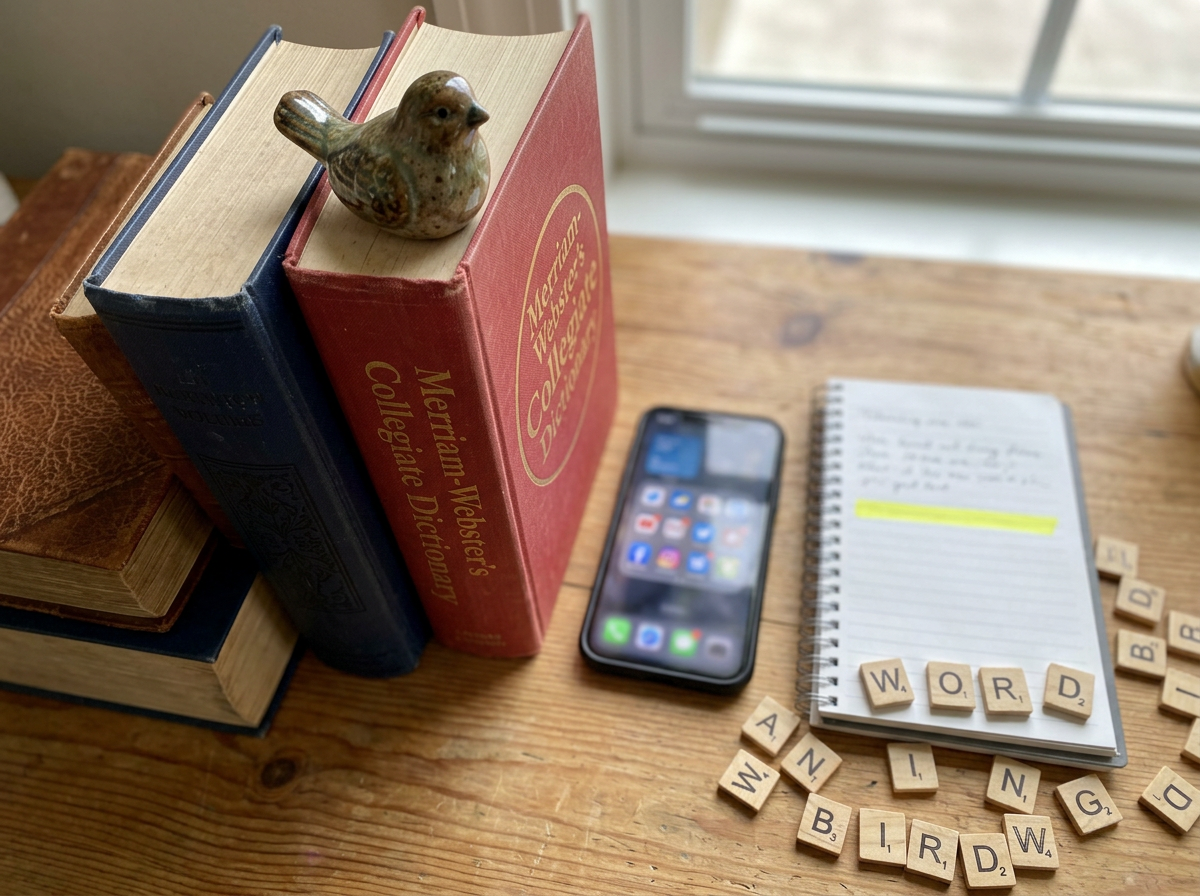
The word 'bird' almost always means one of three things: a literal animal, a figurative label for a person or situation, or a fixed piece of an idiom where the bird imagery is mostly decorative. Which one you're dealing with depends entirely on context, and once you know the patterns, you can crack the meaning in seconds. Let's walk through all of them.
Word Bird Meaning: Literal, Metaphor, and Idioms

Marcus Winters
23 Mar 2026
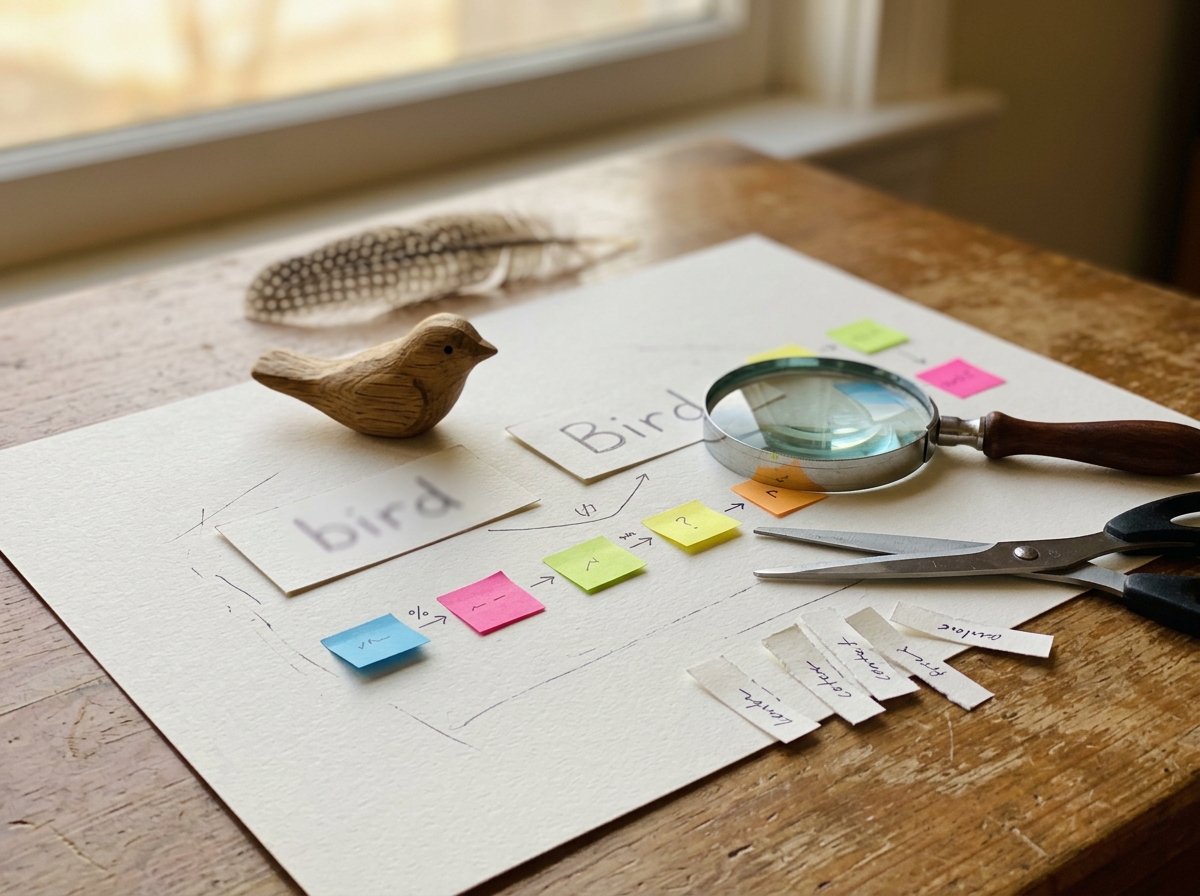
What 'bird' literally means
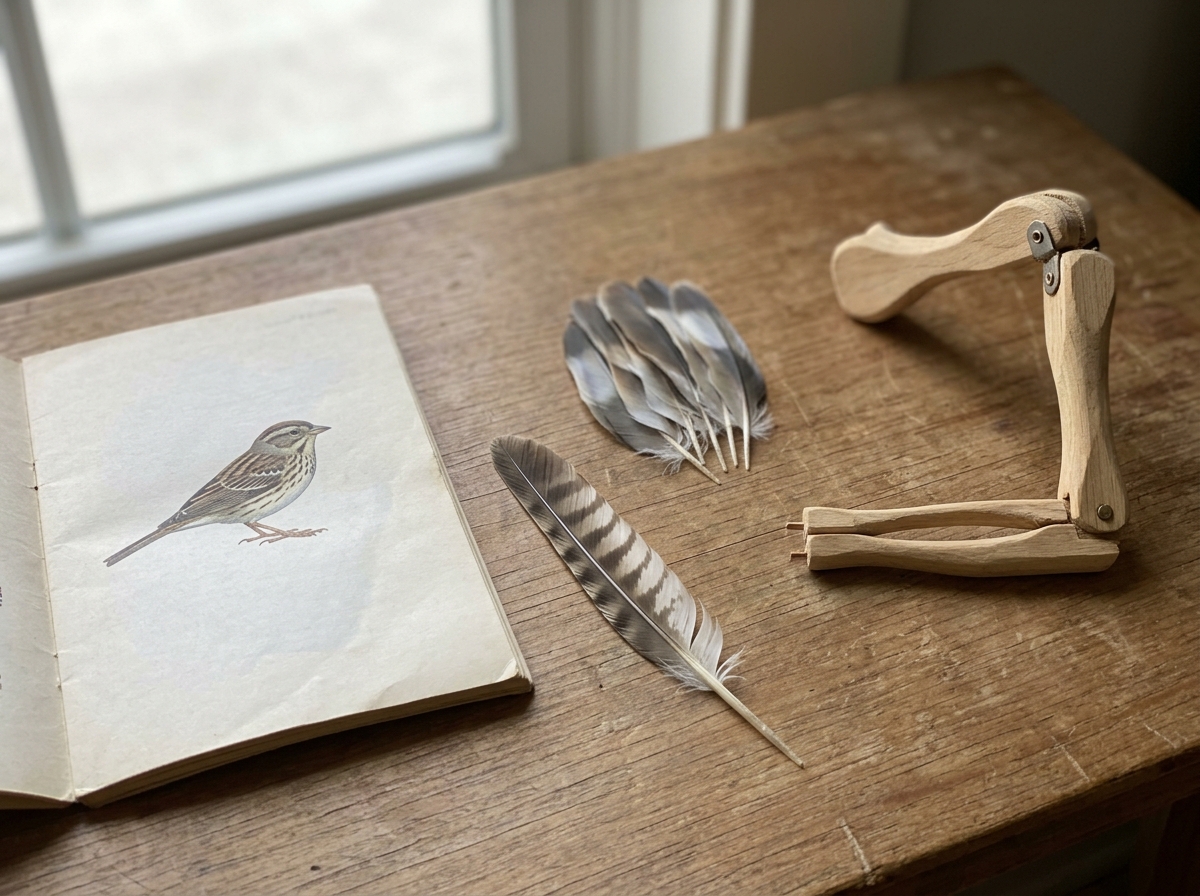
At its core, 'bird' is a noun for a warm-blooded vertebrate with a body covered in feathers and forelimbs modified as wings. That's the Merriam-Webster baseline, and it covers everything from a sparrow at your feeder to an ostrich that can't fly. The sentence 'A large bird flew overhead' is about as clean and literal as English gets: no metaphor, no idiom, just an animal moving through the air.
The word itself traces back to Old English 'bridd,' which originally referred specifically to a young bird or hatchling. Over centuries it widened to cover all birds and eventually pushed out the older word 'fowl' for most everyday uses. That history matters a little because it shows the word was always creature-focused, which is why its figurative spin-offs almost always borrow the animal's physical qualities (flight, height, speed, fragility) to make a point about human life.
How to read 'bird' in context: is it an animal or a symbol?
The fastest way to figure out whether 'bird' is literal or figurative is to ask: could this sentence be about an actual animal? If yes, and nothing else in the sentence signals otherwise, it's probably literal. If the sentence would be absurd with a real animal in mind, you're dealing with a metaphor, idiom, or slang term.
A second clue is capitalization. When 'Bird' appears as a proper noun with no article, it's almost certainly a name or nickname. 'Bird' has a well-documented history as both a given name and a nickname (jazz legend Charlie Parker was famously called Bird), so if the sentence lacks 'a' or 'the,' that's your signal to interpret it as a personal reference rather than a word to look up in the animal category.
A third clue is genre or register. A wildlife article uses 'bird' literally. A spiritual or folklore text talking about what a 'swift bird' or 'secretary bird' means as a symbol is operating in the spirit-animal or totem register, where the species name becomes a carrier of cultural meaning (pride, speed, transformation) rather than a simple taxonomic label. You'll also see this on sites dedicated to bird symbolism, where a secretary bird is discussed for what it represents spiritually, not just for being Sagittarius serpentarius.
Internet slang adds one more layer. 'Birb' is a deliberate misspelling of 'bird' that comes from DoggoLingo, the playful internet register. If you see 'birb' rather than 'bird,' you're in meme territory, not ornithology or symbolism.
Common phrases and idioms with 'bird' and what they actually mean
English is packed with fixed expressions built around 'bird,' and in almost every one of them, the word is doing symbolic or rhetorical work rather than pointing at an actual animal. Here are the ones people search for most often, with plain-language explanations.
A bird in the hand is worth two in the bush
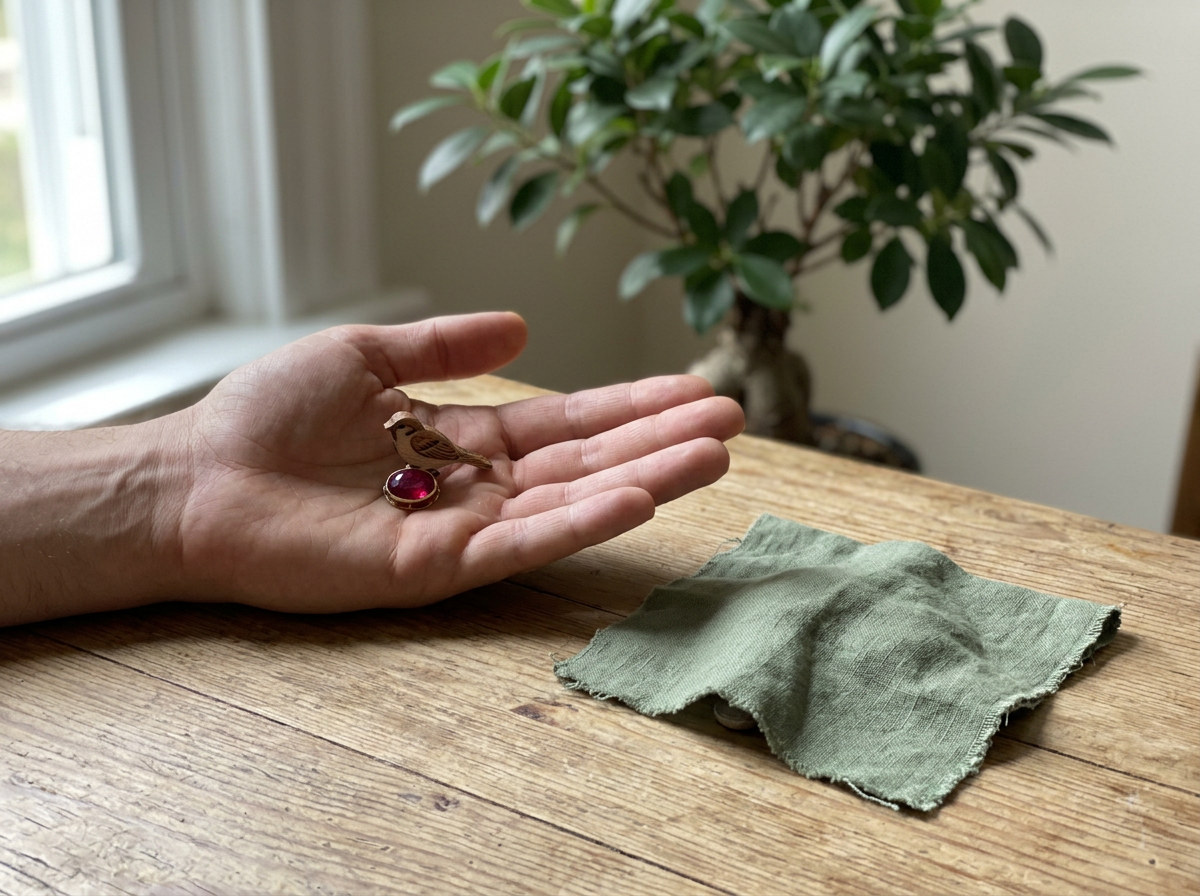
This is one of the oldest proverbs in the English language, traced back to ancient Greek thought. It means: what you already have is more valuable than what you might get if you take a risk. The 'bird in the hand' is whatever you currently hold, the 'two in the bush' are speculative rewards that could escape you. People use it to advise against gambling a sure thing on a long shot. When you see 'bird in the hand' in any sentence, it's never about falconry. It's always about certainty versus risk.
The early bird catches the worm
Straightforward once you know it: arriving or acting early gives you an advantage. The bird image is a robin at dawn pulling a worm from the ground before other birds show up. But the sentence is never really about birds and worms. It's a productivity proverb, used to justify early alarm clocks, first-mover strategies in business, or simply showing up before the competition does.
For the birds
This one means 'useless, trivial, or only fit for the gullible.' The Grammarist definition nails it: something 'for the birds' is not worth your serious attention. The origin is thought to connect to an older, more colorful expression about droppings that birds would pick through, though the cleaned-up version became standard in 20th-century American English. If someone says a policy or idea is 'for the birds,' they're dismissing it, not discussing wildlife.
Bird's-eye view
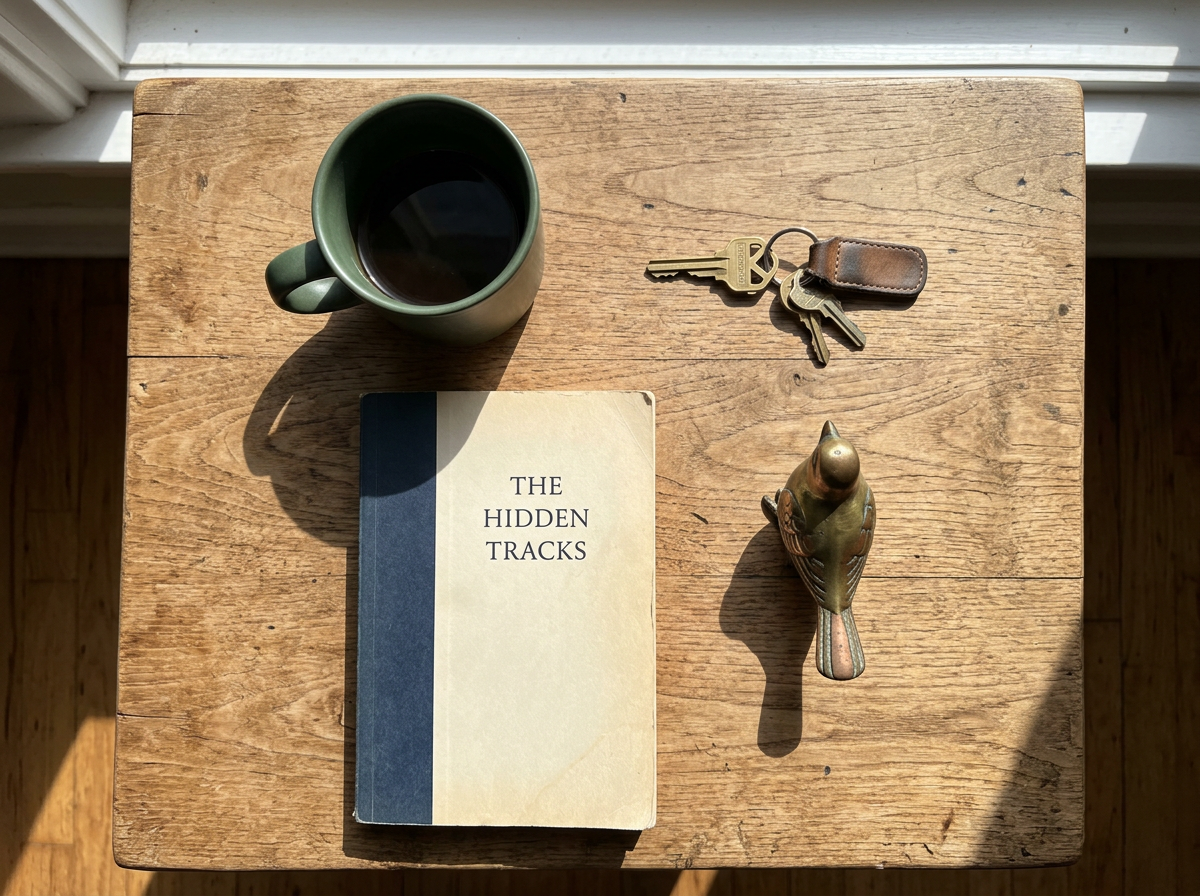
A bird's-eye view is a perspective from directly above, looking down on a scene the way a bird in flight would see it. Britannica illustrates it cleanly: 'We had a bird's-eye view of the city as we flew over it.' Figuratively, it extends to mean a broad, high-level overview of a situation (as opposed to a close-up, granular look). In planning, design, or analysis, having a 'bird's-eye view' means you can see how all the pieces fit together.
The bird is the word
This phrase has almost nothing to do with literal birds. It became famous through the 1963 surf song 'Surfin' Bird' by The Trashmen, then entered a much wider cultural orbit after being featured repeatedly in the animated show Family Guy. The phrase doesn't carry a precise symbolic meaning the way a proverb does. It's pop-culture shorthand for something that's trending, dominant, or the thing everyone is talking about. The bird imagery is essentially nonsense wordplay that stuck through sheer repetition.
Birdbrain and free as a bird
These sit at opposite ends of the evaluative spectrum. 'Birdbrain' (officially in Merriam-Webster as meaning 'a stupid person' or 'scatterbrain') is an insult that borrows the perceived smallness of a bird's brain to suggest low intelligence or short attention. 'Free as a bird,' on the other hand, uses the image of unrestrained flight to mean complete freedom, usually in the sense of having no obligations, worries, or restrictions. Same animal, completely different emotional valence depending on which quality the speaker is borrowing.
What birds symbolize in folklore and spirituality
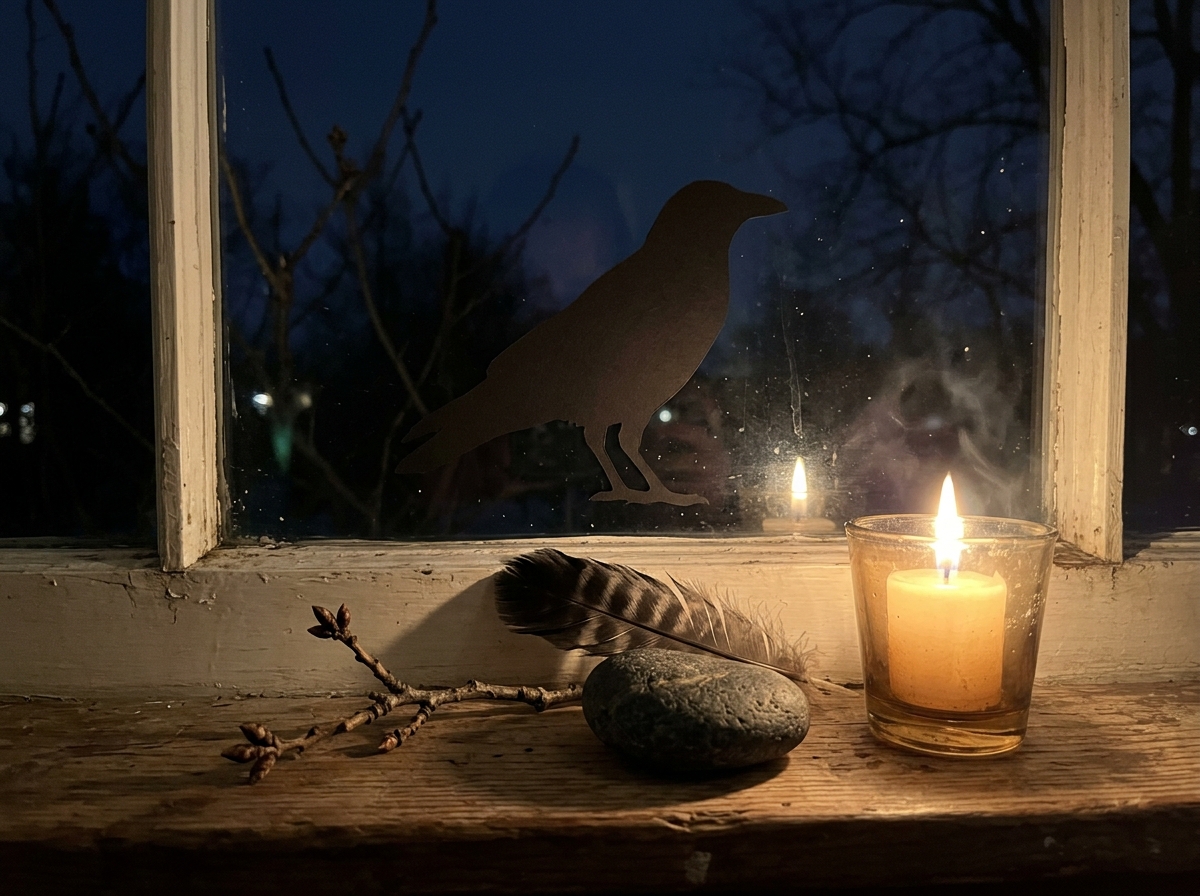
Across cultures and across history, birds have carried a remarkably consistent set of symbolic associations: freedom (because of flight), the soul or spirit (because they move between earth and sky), messages from another realm, and transformation. This is why a bird appearing in a dream, a story, or a piece of folklore almost always signals a liminal moment, something crossing between states or realms.
In many Indigenous American traditions, specific birds carry specific messages. In Celtic lore, ravens and crows are associated with the otherworld and prophecy. In ancient Egyptian religion, the ibis was sacred to Thoth, god of knowledge and writing. The dove in Abrahamic traditions represents peace and the Holy Spirit. These aren't random. Each symbolic meaning attaches to something observable about the bird's behavior, appearance, or habitat, and then language picks that meaning up and runs with it.
Modern spiritual content follows the same logic. Modern spiritual content follows the same logic. When you read about the 'spark bird meaning' in a spiritual context, the discussion focuses on the bird's upright, deliberate posture and its fearless way of dealing with snakes, which gets translated into symbolic qualities like confidence, pride, and the ability to overcome hidden dangers. spark bird meaning, the discussion focuses on the bird's upright, deliberate posture and its fearless way of dealing with snakes, which gets translated into symbolic qualities like confidence, pride, and the ability to overcome hidden dangers. Modern spiritual content follows the same logic. Modern spiritual content follows the same logic. When you read about the secretary bird meaning in a spiritual context, the discussion focuses on the bird's upright, deliberate posture and its fearless way of dealing with snakes, which gets translated into symbolic qualities like confidence, pride, and the ability to overcome hidden dangers., the discussion focuses on the bird's upright, deliberate posture and its fearless way of dealing with snakes, which gets translated into symbolic qualities like confidence, pride, and the ability to overcome hidden dangers. Similarly, a search for 'swift bird meaning' in a spiritual context pulls up themes of speed, divine messages, and the ability to navigate rapidly changing circumstances. The bird's literal behavior is always the seed; the symbolic meaning is what grows from it. The bird's literal behavior is always the seed; the symbolic meaning is what grows from it.
This is the pattern worth memorizing: in symbolic and spiritual language, the word 'bird' (or any specific bird name) is almost always pointing at a quality that the animal embodies in observable life. To decode the symbolism, ask what the bird actually does, and you're most of the way there.
Slang and metaphorical uses of 'bird' in everyday speech
Beyond idioms and spirituality, 'bird' has a set of everyday slang uses that vary heavily by region and era. The most documented is the British and Australian English use of 'bird' to mean a young woman, which Cambridge and Collins both list explicitly as UK slang. This use is informal and somewhat dated but still understood. You'll hear it in older British films and still occasionally in casual speech. Context almost always makes it obvious: 'He's seeing a bird from work' is not about a pet.
In British English, 'doing bird' is also a well-known idiom meaning to serve a prison sentence (it comes from rhyming slang: 'birdlime' equals 'time'). Again, a real bird has nothing to do with it.
In American slang, 'giving someone the bird' means making a rude gesture with a single finger. This is so established that most English speakers understand it without explanation, even if they'd never say it. The gesture is the message; the word 'bird' is just the euphemism.
Metaphorically, English also uses birds as animal epithets to characterize people. Calling someone a 'birdbrain' or describing them as 'flighty as a bird' borrows from the perceived qualities of the animal to make a judgment about a person's behavior or intelligence. This is part of a broader pattern in English where animal names serve as personality shorthand, and birds are especially well-represented in that category.
A quick comparison of the main 'bird' meanings
| Meaning Type | What 'bird' refers to | How to spot it | Example |
|---|---|---|---|
| Literal (animal) | An actual bird species | Descriptive context, movement, habitat details | "A large bird flew overhead." |
| Idiom/proverb | Symbolic concept (risk, opportunity, freedom) | Fixed phrase pattern, no real bird plausible | "A bird in the hand is worth two in the bush." |
| Spiritual/symbolic | A quality or message associated with a species | Spiritual, folklore, or totem context | "The secretary bird symbolizes pride and courage." |
| Slang (UK/AU) | A young woman | British or Australian informal speech | "He's been dating a new bird." |
| Slang (US, gesture) | A rude hand gesture | Phrased as 'giving someone the bird' | "He gave the driver the bird." |
| Proper name/nickname | A person named Bird | Capitalized, no article before it | "Bird scored 21 points last night." |
| Internet slang (birb) | Cute/funny bird image, meme culture | Deliberate misspelling, image-focused | "Look at this silly birb." |
The recommendation here: start with the literal meaning, then rule it out if the sentence wouldn't make sense with a real animal. If a fixed phrase is present ('in the hand,' 'early bird,' 'for the birds'), treat it as an idiom unit. If the text is spiritual or folkloric, you're in the symbolism register. Everything else is slang or proper-name territory.
How to figure out the exact meaning fast
Here's a repeatable checklist you can run through anytime you see 'bird' in a sentence and aren't sure what it means.
- Check capitalization first. 'Bird' with a capital B and no article is almost certainly a proper name or nickname. Move on from there.
- Ask if a real animal fits. Substitute 'a feathered flying animal' into the sentence. If that's absurd, it's figurative.
- Look for fixed phrase patterns. 'In the hand,' 'early bird,' 'bird's-eye,' 'for the birds,' 'free as a bird,' and similar constructions are idiom units with set meanings. Look up the whole phrase, not just the word.
- Check the register of the text. Wildlife writing means literal. Spiritual, totem, or folklore writing means symbolic. British casual speech may mean slang for a person. Pop culture references to 'bird is the word' mean a cultural reference.
- Look for a species name. 'Swift bird,' 'secretary bird,' 'jay,' and other named birds often carry their own specific symbolic or idiomatic history. If you're researching those, treating the full phrase as the unit of meaning will get you further than just looking up 'bird.'
- When slang is possible, check for regional markers. British English uses 'bird' for a young woman; American English rarely does. Australian English shares some British usages. The speaker's background is a fast filter.
- If the meaning still isn't clear, look up the full phrase on a reference site focused on idioms or bird symbolism. Single-word dictionary entries often won't give you the phrase-level meaning you need.
That seven-step process covers the vast majority of cases. Most of the time you'll resolve it by step two or three. The deeper cases (specific bird symbolism, regional slang, historical proverbs) may need a quick phrase-level lookup, but once you know what category you're in, you know exactly where to look.
If you're exploring specific bird terms beyond 'bird' itself, there's a lot of useful territory nearby. The symbolic meanings of specific species like the secretary bird or the swift carry their own distinct interpretive histories worth digging into, and idioms built around those species often reveal how a bird's real-world behavior shaped the figurative meaning that stuck in language. Start with the animal's actual qualities, follow the metaphor, and the meaning usually becomes clear.
FAQ
If I see “a bird” or “the bird” in a sentence, does it automatically mean literal bird?
Not automatically. Articles often appear with both literal and idiomatic uses. The quick check is whether the sentence’s grammar treats it like a type of person or like a proverb fragment. For example, if the phrase matches an established idiom (like “in the hand” or “for the birds”), it is idiom even though it uses articles.
How can I tell whether “bird” is being used as slang for a person versus metaphor for an idea?
Look for second-person or social framing cues. Slang uses usually point to a human role (for example, “seeing a bird,” “my bird,” or “that bird from work”). Metaphor usually describes qualities or actions (“flighty,” “birdbrain,” “early”). If the sentence could be paraphrased as “woman” without changing the meaning, it is likely slang.
What does “Bird” (capital B) usually mean in writing, and when is it still the animal word?
Capitalization most often signals a nickname, given name, or title, especially if it appears without an article like “Bird flew in” or “Call him Bird.” It can still be animal-related when a sentence uses a proper noun in a specific name (for example, “Bird of Paradise”), but those cases usually have additional naming context that goes with the plant or species name.
Is “bird” in dreams always a spiritual or symbolic message?
Not always. Dreams can use symbols loosely, but many dream interpretations treat bird meaning as metaphor rather than a fixed universal code. A practical approach is to connect the dream bird to the emotional tone (freedom, threat, messenger feeling) and your waking context (recent messages, travel, decisions). If the dream includes a specific action you can map (soaring, caged, being hunted), that often matters more than the general word “bird.”
What if the phrase is similar to a known proverb but not exact (like “a bird in hand”)?
Idioms often survive with minor wording changes, but the key elements usually remain. “Bird in hand” usually still means certainty over risk, even if the full structure (like “two in the bush”) is missing. If the sentence changes the structure so the risk versus certainty idea disappears, treat it as metaphor or casual phrasing rather than the proverb.
Does “bird’s-eye view” ever mean literally seeing from above by a bird?
In most general usage, it is a perspective expression, not a literal description of an animal observation. You would only treat it literally if the surrounding text clearly describes an actual aerial viewing method, like a bird being released or directly referenced as the observer. Otherwise it means a high-level overview, often from a map-like or supervisory standpoint.
Is “for the birds” always negative and dismissive?
In mainstream modern usage, yes, it is dismissive or “not worth serious attention.” However, tone can vary slightly: sometimes it is playful (light complaint) and sometimes it is cutting (rejection). If the speaker is clearly discussing triviality or impracticality, that’s still the idiom’s negative core.
What’s the difference between “birdbrain” and calling someone “flighty as a bird”?
They target different perceived traits. “Birdbrain” is an intelligence or attention insult (stupid, scatterbrained). “Flighty as a bird” criticizes inconsistency or lack of steadiness (unreliable, easily distracted). If you can replace the phrase with “unfocused” versus “not smart,” you are likely distinguishing the two correctly.
Does “free as a bird” always mean having no obligations, or can it mean emotional freedom too?
It can cover both, but the common thread is unrestrained lack of burden. Depending on context, it can mean no job or legal obligations, or it can mean psychological ease (no worries, feeling unburdened). If the surrounding text mentions schedule or rules, lean toward obligations. If it mentions stress or peace of mind, lean toward emotional freedom.
Why does “giving someone the bird” sometimes appear without the word “bird” explicitly explained?
Because the gesture is the meaning. In many American contexts, speakers treat it as taboo language and rely on shared cultural knowledge. Even if the sentence never describes the gesture, the phrase is understood as a rude, single-finger pointing. If your audience is non-native, clarifying the intent may be necessary, but you can still keep it non-graphic.
Next Article
Word Bird Meaning: What Does the Term Refer To?
Understand word bird meaning across slang, usernames, and figurative language, including odd spacing like w o r d bird.