If you searched 'odd bird meaning,' you're likely trying to figure out one of two things: either someone called a person an 'odd bird' and you want to know what that phrase actually means, or you encountered the phrase somewhere and suspect it might be pointing to a specific bird with symbolic or spiritual significance. Both are completely valid readings, and knowing which one applies to your situation changes everything about how you interpret it. Let's sort that out right now.
Odd Bird Meaning: Idiom vs Symbolic Omen Explained

Marcus Winters
23 Mar 2026
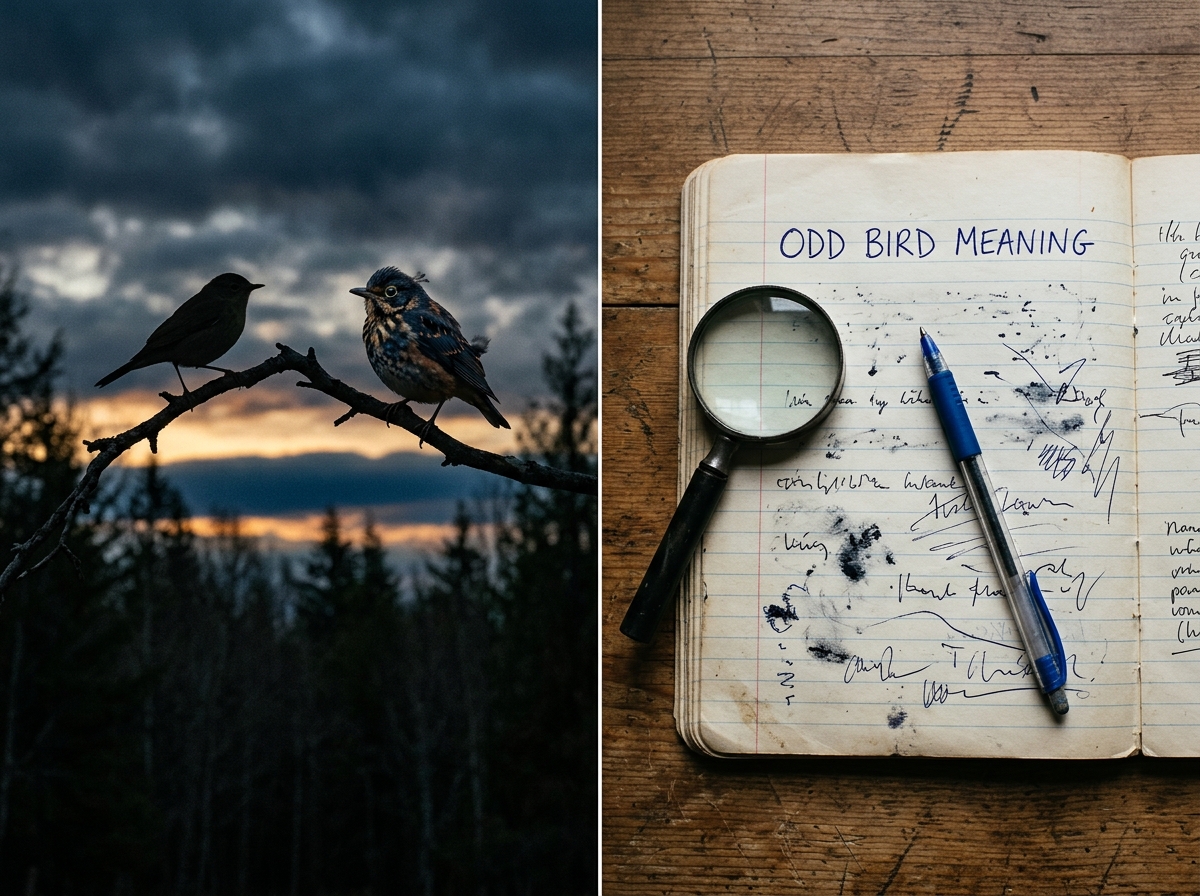
Is 'odd bird' an idiom or a bird symbolism reference?
The phrase 'odd bird' sits at an interesting crossroads. In everyday English, it's a well-established idiom that describes a person, not a literal bird at all. Collins English Dictionary explicitly notes that 'bird' can mean 'a person (usually preceded by a qualifying adjective, as in the phrases rare bird, odd bird, clever bird),' which is exactly the pattern at work here. When someone says 'she's an odd bird,' they are commenting on a person's character, not pointing at a species in the yard.
However, if the context you encountered had nothing to do with describing a person, and instead involved a real bird appearing unexpectedly, or a passage in a spiritual, folklore, or literary text referencing a strange bird as an omen or symbol, then the search is pointing somewhere different entirely. In that case, the bird's species, behavior, color, and the tradition behind it all matter, and you need a completely different approach to interpret it correctly.
The simplest way to tell the difference: look at whether the sentence is describing a person or describing an actual bird. If it's describing a person, you're dealing with the idiom. If it's describing a real bird encounter or a symbol in a cultural text, you're dealing with symbolism. We'll cover both fully below.
What 'odd bird' actually means as an English idiom
At its core, calling someone an 'odd bird' means they are unusual, eccentric, or hard to categorize. It's a way of saying a person doesn't quite fit the standard mold, whether that means their personality, habits, opinions, or the way they move through the world. The word 'odd' carries the weight here: it signals something that doesn't match the expected pattern, like the odd sock in a drawer full of pairs.
The bird part of the phrase draws on a long tradition in English of using birds as stand-ins for people and their characters. Think about how naturally we reach for bird comparisons when describing personalities: someone is a night owl, a free spirit gets called a free bird, a timid person is described as bird-like. Birds are observed, categorized, and associated with specific behaviors, so attaching a bird label to a person immediately carries connotations of being studied or categorized as a type. Calling someone an 'odd bird' borrows that framing to say: this person is their own unusual category.
One good literary example comes from prose at the Center for Humans and Nature, where the phrase 'odd enough little bird' is used to describe a person's identity and qualities in a figurative sense, reinforcing that this is fundamentally a character description rather than a literal reference to a feathered creature.
Is it an insult, a joke, or a compliment? It depends on tone
This is where a lot of confusion happens, and getting it wrong can be awkward. 'Odd bird' can land as gently affectionate, mildly critical, or genuinely insulting depending entirely on who says it, how they say it, and what relationship they have with the person being described.
Affectionate use: A grandmother describing her creative, unconventional grandchild as 'a real odd bird, always has been' is almost certainly expressing fondness and a kind of admiring bewilderment. The eccentricity is framed as a charm. You'll often hear this tone among close friends or family who know someone well enough to find their quirks endearing.
Neutral or observational use: A coworker saying 'he's a bit of an odd bird, keeps to himself' in a matter-of-fact tone is usually just noting that someone is unusual without strong positive or negative judgment. It's descriptive rather than damning.
Critical or dismissive use: If the tone is clipped, the context is a complaint, or the phrase is paired with other negative observations, 'odd bird' tilts toward criticism. 'I don't know what to make of her, she's just an odd bird' said with frustration signals that the strangeness is a problem, not a delight.
The key reading tool is always context and delivery. The phrase itself is neutral enough to swing in multiple directions, which is part of what makes it interesting as an expression.
Similar expressions and how they're different
English has a cluster of phrases that all gesture toward 'this person doesn't quite fit,' and they're easy to conflate. But each one carries a slightly different shade of meaning.
| Expression | Core meaning | Tone | Key difference from 'odd bird' |
|---|---|---|---|
| Odd bird | An unusual, eccentric person | Neutral to warm; can be affectionate | Focuses on eccentricity and personality type; character-based |
| Odd one out | The person who doesn't belong in a specific group | Neutral; often situational | More about group dynamics than personal character |
| Black sheep | A disreputable or disfavored member of a group | Often negative; implies shame or embarrassment | Carries moral or social judgment; first known use traced to 1640 |
| Bird of a different feather | Someone clearly unlike others in a group | Usually neutral or positive | Emphasizes difference from a specific group rather than general eccentricity |
| Weird bird | Similar to odd bird; informal and slangy | More blunt; can lean negative | Less refined; often used more casually or dismissively |
The clearest distinction is between 'odd bird' and 'black sheep.' A black sheep, as Merriam-Webster defines it, is specifically a disfavored or disreputable member of a group, with connotations of shame or disgrace. An odd bird is simply unusual, not necessarily in a way that brings embarrassment. You can be a lovable odd bird. Being the black sheep of the family is rarely presented as charming.
'Bird of a different feather' (a variant of 'birds of a feather flock together') highlights difference from a peer group rather than personal eccentricity. It's relational. 'Odd bird' is more of a standalone character assessment. If you want to explore more bird-rooted expressions and what they signal about personality or identity, the section on bird-related idioms and figurative language across this site covers a wide range of them.
If you meant a real bird with symbolic meaning: start here
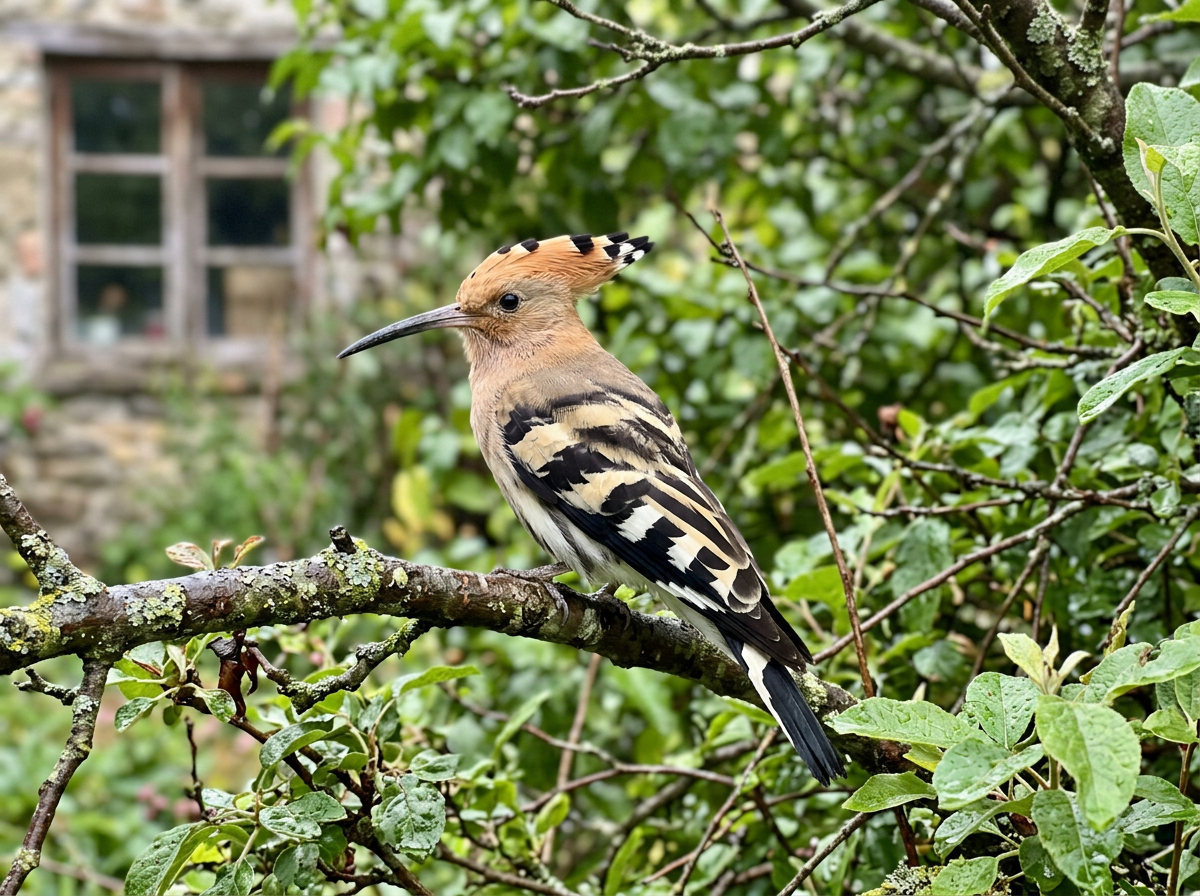
If you're here because you saw an unusual bird, or a passage in a spiritual or folklore text mentioned a strange bird as an omen, then the idiom reading isn't your answer, your next step is to figure out the avid bird-watcher meaning. Instead, you need to identify the actual bird before you can meaningfully interpret what it might represent.
Start with what you can observe or recall. The more specific the detail, the better your identification and interpretation will be. Here's what to note:
- Size and shape: Was it small like a sparrow, medium like a crow, or large like a hawk or heron?
- Color and markings: Dominant color, any unusual patches, eye color, beak shape
- Behavior: Was it perching quietly, calling repeatedly, flying erratically, approaching you directly, or appearing in an unusual place?
- Location and time: Indoors, at a window, in a city vs. wild setting, and what time of day
- Whether it was alone or in a group
Once you have those details, you can identify the species using a field guide app like Merlin Bird ID, or by searching your description against regional bird databases. Getting the species right is non-negotiable before you look up symbolism. An owl visiting at night carries entirely different cultural weight than a crow appearing at midday, even if both feel 'odd' in the moment. If you're interested in how specific species carry their own distinct symbolic meanings, articles on owl bird meaning or emu bird meaning give good examples of how species-specific that work really is.
How to interpret bird symbolism without getting it wrong
Bird symbolism is not universal. That's the single most important thing to understand before you go looking up what a bird 'means.' The same species can be an omen of death in one culture and a symbol of good fortune in another. Context, tradition, and your own cultural background all shape what a bird encounter means, or whether it means anything at all beyond the bird doing its ordinary bird things.
Here's how to interpret bird symbolism in a grounded, accurate way:
- Identify the species first (see above). Symbolism is species-specific, not just 'bird' in general.
- Note the behavior, not just the presence. A crow cawing repeatedly at your window is culturally loaded in ways that a crow eating from a dumpster nearby simply isn't.
- Consider the setting. A wild bird indoors is unusual and more likely to carry meaning in folk traditions. A bird in its natural habitat doing natural things is less likely to be a meaningful omen.
- Trace the tradition. Ask which culture or tradition you're drawing the symbolism from. Native American traditions, Celtic folklore, East Asian symbolism, and Western Christianity all read the same bird differently. Don't blend them without awareness.
- Check multiple sources within the same tradition rather than the first result on a general symbolism site. Cross-referencing keeps you from misreading a single interpretation as universal truth.
- Apply some personal discernment. Many people find genuine meaning in bird encounters through their own spiritual framework. That's valid. Just hold the interpretation lightly and recognize it as one lens, not a fixed cosmic message.
If the bird in question is one with strong traditional symbolism, such as an owl, a raven, or a cardinal, you'll find well-documented interpretations across multiple traditions. If it's a more obscure species, the symbolism may be thinner or more regionally specific. Either way, the species identification comes first.
Quick ways to confirm which meaning applies to what you read
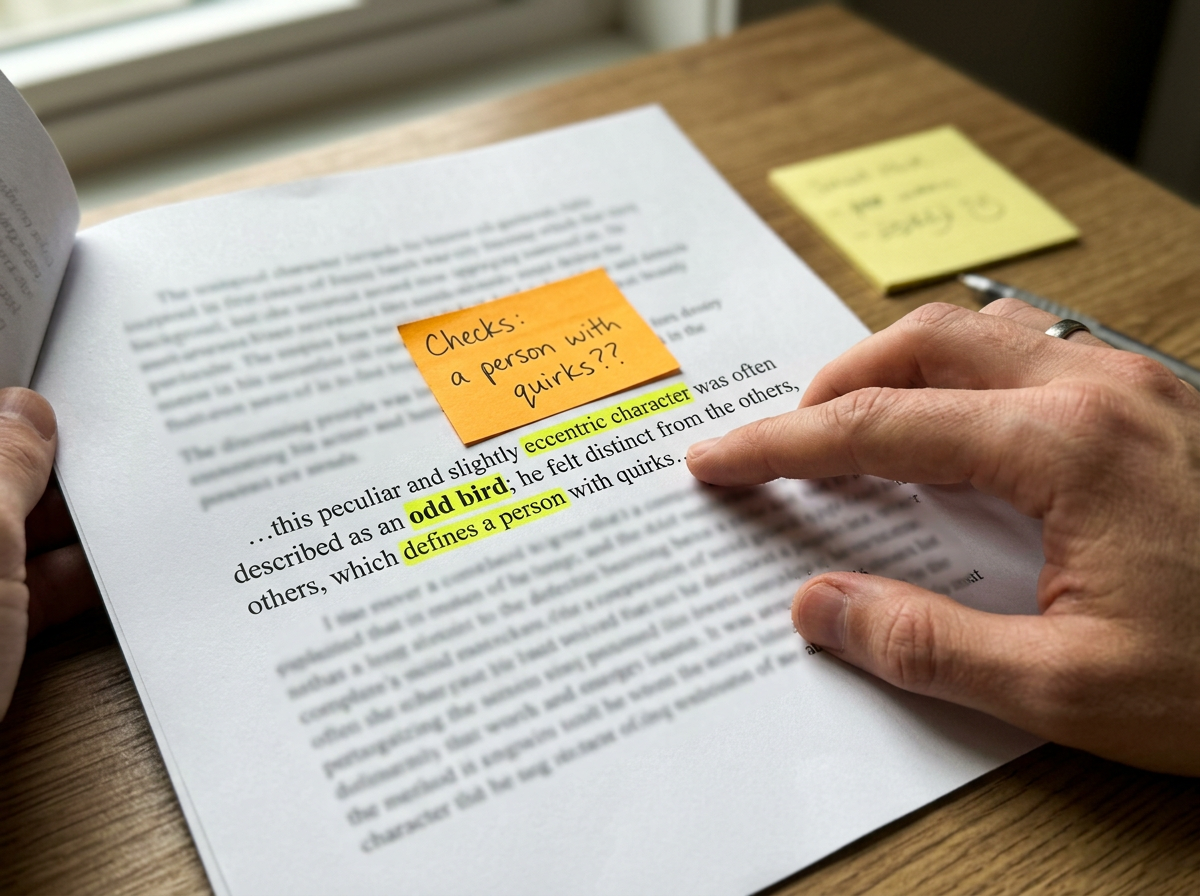
If you're not sure whether the 'odd bird' you encountered is idiomatic or symbolic, run through these checks against the original sentence or context:
- Is a person being described? If yes, it's almost certainly the idiom. 'She was always an odd bird' = figurative, about character.
- Is there a literal bird in the scene? If the text is describing an actual bird appearing in someone's yard, window, or journey, you're looking at potential symbolism territory.
- What's the surrounding genre or context? Fiction, memoir, or casual conversation skews toward the idiom. Folklore, spiritual writing, or nature writing skews toward literal or symbolic bird readings.
- Can you replace 'odd bird' with 'unusual person' and have the sentence still make sense? If yes, idiom confirmed.
- Is the bird's species named? If someone writes 'an odd bird, dark as coal, circled the house,' they're describing a real bird with potentially symbolic intent. If they write 'he was an odd bird who refused to shake hands,' that's clearly the idiom.
- Look at the verb. 'He was an odd bird' = idiom. 'An odd bird appeared at the window' = possibly symbolic.
These checks resolve the ambiguity in almost every case. The idiom is by far the more common use in modern everyday English, so when in doubt and without strong contrary evidence, the idiomatic reading is usually the right starting assumption. If the sentence is pointing to a real bird with unusual behavior or appearance in a spiritually charged context, then pivot to the symbolism pathway and start with species identification.
Either way, you now have the full picture: 'odd bird' most often means an unusual, eccentric person, used affectionately or neutrally far more often than critically. If it isn't about a person at all, the real work is identifying what bird you're actually dealing with before drawing any symbolic conclusions. Both readings are legitimate. The sentence you found it in will tell you which one you need.
FAQ
If someone says “odd bird” in a text message, how can I tell whether it is affectionate or insulting?
Look for tone markers like emojis, intensifiers (“real,” “such,” “always”), or framing (“my odd bird”) versus complaints (“what is wrong with,” “can’t stand”). In plain text without these cues, “odd bird” is often mildly critical if the surrounding sentences also express frustration.
Is “odd bird” always about eccentric personality, or can it mean “strange situation” too?
In everyday English it is typically a character description of a person. To mean a situation, English usually uses different wording (for example, “an odd situation” or “a strange turn”). If no person is present, check whether the phrase is being used metaphorically or whether someone else is implied.
Does “odd bird” have the same meaning as “weird” or “strange” (insult), or is it softer?
It is usually softer than a direct insult. “Odd bird” commonly lands as playful, observational, or mildly evaluative, not automatically hateful. Direct insults tend to name behavior as unacceptable, while “odd bird” points more to being hard to categorize.
What’s the difference between “odd bird” and “bird of a different feather” in practical use?
“Odd bird” describes one person’s uniqueness. “Bird of a different feather” compares people by group or peer differences (who you resemble or don’t resemble). If the sentence is about belonging or similarity, it is more likely the latter.
Can “odd bird” ever be used literally to describe an actual unusual bird?
Yes, but it is uncommon in modern casual English. Literal use usually includes extra context, like “the odd bird on my feeder,” plus observable details. If the sentence lacks a person reference and includes concrete bird observations, a literal reading becomes more likely.
If I saw a strange bird and someone mentioned “odd bird meaning,” should I assume it is symbolism automatically?
Not automatically. First confirm whether the phrase was actually idiom content (commenting on a person) or whether it was part of a narrative about the bird itself. If you have real bird details (location, time of day, behavior), symbolism is more responsibly pursued, but you still must identify the species before assigning meaning.
How should I interpret “odd bird” when it refers to someone in a group, like “the odd bird out”?
That phrasing often shifts from general eccentricity to social separation. “Out” suggests the person is singled out as not fitting within the group’s norms, so the emphasis is more about belonging and difference than simply being personally unusual.
What should I do if I’m unsure which reading applies, idiom or omen?
Use a quick decision check: (1) Is a person being described, directly or by pronouns, in a conversational or character-focused sentence? If yes, start with the idiom reading. (2) Is there bird-specific description (species, color, behavior, where it appeared) and a spiritually framed context? If yes, start with species identification and symbolism cautiously.
Is bird symbolism universal, and should I trust a single “odd bird meaning” source?
Bird symbolism is not universal. The same species can mean different things depending on culture, region, and tradition. If you use symbolism, triangulate using the tradition that matches your context and treat it as interpretive meaning rather than a guaranteed prediction.
What common mistake should I avoid when interpreting bird encounters as omens?
Avoid treating “unusual” as “meaningful.” A bird can appear for ordinary reasons like weather, migration, or habitat changes. If you cannot identify the species or the behavior pattern, refrain from strong conclusions and focus on documentation (time, location, what the bird did).
Next Article
Owl Bird Meaning: Literal and Symbolic Interpretations
Step-by-step guide to owl bird meaning: literal use, owl symbolism vs bird metaphors, and context clues.